Marine operations run on tight windows, complex interfaces, and mixed workforces. Safety alignment is usually the first thing to crack under operational pressure. When standards differ between employers, the weakest link sets the risk level. In an environment where mooring, lifting, bunkering, and vessel turnaround all carry high consequence risk, even small inconsistencies can escalate fast.
I have spent more than 20 years supporting ports, ferry operators, and marine contractors. One thing has become increasingly clear. Alignment is no longer a nice to have. It is the next frontier in marine safety. If you are looking for a meaningful direction to take in 2026, this is it.
The truth is simple. Most marine operators are accountable for the safety performance of people they do not employ. Unless everyone works to the same expectations, the system will always have gaps.
Here are the five biggest barriers I see across the sector, and what you can do to get ahead of them.
This is the issue everyone notices first. Walk any quay or terminal and you will see mismatched flotation devices, different hi vis standards, different footwear, and different interpretations of what good looks like.
It is not just a visual problem. It creates hesitation. If a contractor sees an employee wearing different PPE, they start questioning what is actually required. That is when shortcuts creep in, especially during fast paced operations.
It also undermines professionalism. To vessel crews and the public, inconsistent PPE looks like inconsistent standards.
2026 direction: Move towards role specific, standardised PPE kits for both employees and contractors. When everyone looks aligned, they act aligned.
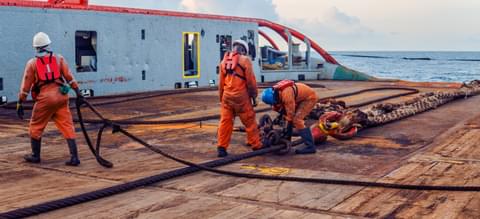
Marine operations do not wait for perfect timing. Contractors arrive at short notice. Vessel schedules shift. Weather compresses windows. In the rush, onboarding often gets shortened or diluted.
The result is gaps in understanding around:
These gaps show up in behaviours long before they show up in incident reports.
2026 direction: Create portable, consistent onboarding that follows the worker, not the site. Short, sharp, marine specific modules that reinforce the same expectations everywhere.
This is the hardest barrier because it is invisible until it is not.
Contractors come from different companies, different ports, and different sectors. They bring their own habits, assumptions, and interpretations of safe enough. Marine operations rely on real time coordination between people who may have never worked together before. If their expectations do not match, you get drift. And drift is dangerous.
2026 direction: Focus on shared language and shared behaviours, not just shared rules. Culture is built through repetition, clarity, and reinforcement, not documents.
If contractors are not measured, they are not managed. And if they are not managed, you are flying blind.
Many marine operators still struggle to integrate contractor data into their internal reporting systems. Some contractors track their own KPIs separately. Others provide limited visibility. The result is a fragmented picture of risk.
You cannot improve what you cannot see.
2026 direction: Push for aligned KPIs across employees and contractors. One set of expectations. One set of measures. One safety picture.
This is the silent killer of consistency.
Different terminals order from different suppliers. Contractors bring their own gear. Departments buy at different times. Specifications drift. Quality varies. Lead times slip.
Suddenly, you have several versions of approved PPE circulating across your operation. In a high-risk environment, that is not just inefficient. It is unsafe.
2026 direction: Move towards a managed supply model that centralises standards, stock, and specifications. When procurement aligns with safety, everything else follows.

If you want to make a meaningful shift in 2026, here it is.
Treat safety alignment as a strategic priority, not an operational task.
That means consistency in:
At Tower, we support marine operators by building the infrastructure that makes alignment possible. Not just supplying PPE but creating the systems around it.
Here is how we help organisations close the gap.
This is not about equipment. It is about control, clarity, and confidence across a workforce you do not fully employ but are fully accountable for.
When safety is fragmented, risk increases. When everything is aligned, including equipment, behaviours, onboarding, and reporting, everyone benefits.
If you are looking for a new direction to take in 2026, this is the one that will make the biggest impact.