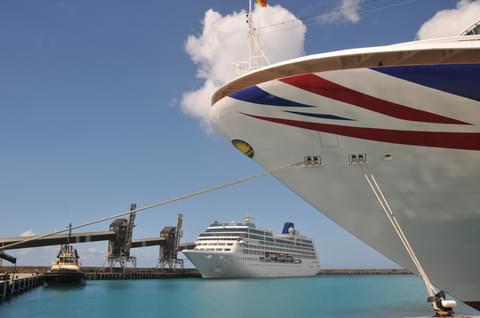
When people think about sustainability in cruise, they often think about the big-ticket items first such as fuel, emissions, shore power, new ship design. Don't get me wrong, those areas matter enormously. But what about the everyday operational decisions happening behind the scenes? What about the hotel teams, procurement choices, waste streams, consumables, uniforms and guest behaviours that quietly shape the true sustainability performance of a ship? That is where cruise hotel operations become so important when it comes improving sustainability.
I have spent a lot of time on and around cruise ships (both as a passenger and through my work with cruise operators!), and what continues to impress me is the level of complexity involved. It's important to remember that a cruise ship is not just a vessel, it's a floating hotel, restaurant, workplace, logistics network and community all in one, carrying thousands of people while moving between ports, countries and regulatory environments.

So how do you make all that more sustainable?
For me, progress often starts with visibility. If we can see where waste is created, where products are overused, where stock is carried unnecessarily or where guest behaviour creates pressure, we can start making better decisions.
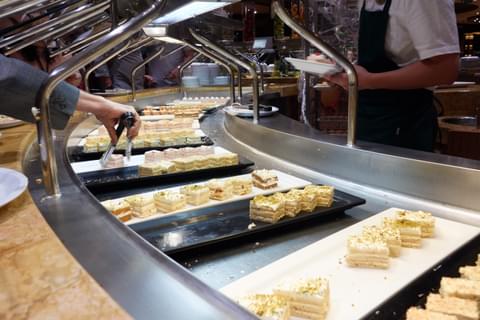
Take food waste, for example. In crew areas behind the scenes, it is common to see clear systems for waste disposal and sometimes even information showing how much food waste has been generated. But the questions I ask is: Would guests behave differently if that same visibility existed elsewhere? Would people take less, waste less and think more carefully about what they consume if they saw the same powerful messages?
Technology also has a huge role to play in this. Sensor-led consumable systems can help ensure products are replaced only when needed, not simply because a schedule says so, and smart cabin systems can reduce unnecessary energy use when guests leave their rooms. These are not abstract sustainability ideas, these are practical cruise hotel solutions that reduce waste, improve efficiency and protect the guest experience.


Sourcing is also a heavily overlooked factor in sustainability. Cruise lines are global by nature, but that does not mean every product needs to travel further than necessary. Regional sourcing, where practical, can reduce transport impact, improve resilience and support more efficient supply chains. It is not always simple to achieve your goals in this area, but the potential value is clear.
Uniforms are another area that deserves more attention, because as crew move between ships, contracts and regions, it makes uniform management far more complex than in a land-based operation. That's why it's key to ask the big questions: What happens to end-of-life garments? How do we keep them out of landfill? How do we give crew a simple, safe and reliable way to return used uniform? This all helps turn sustainability from a statement into an operational reality.
The future of sustainable cruising will also depend on major infrastructure investment. Shore power, fleet modernisation and fuel flexibility all have a part to play. Because sustainability is not one decision. It is thousands of decisions, made consistently, across every part of the operation.
If you want to deep dive into this subject more I recommend you read our Industry Insights publication: 'On Course for Sustainability'.

A leading authority on the cruise industry, Mark has board-level experience and has been involved in cruise since 1995, moving his focus to suppling cruise in 2014.